The Science Behind Zero-Preservative Food
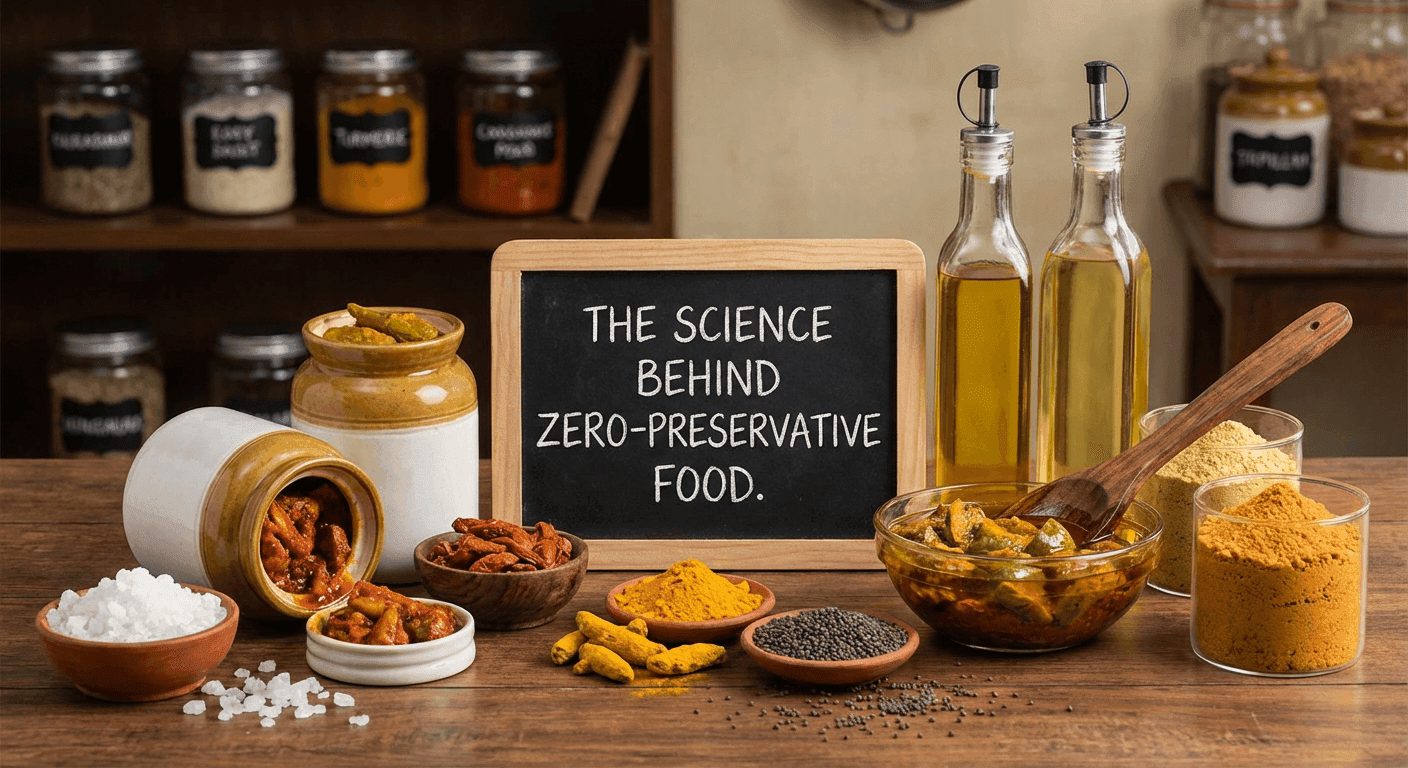
In an age of processed foods and chemical additives, House of Kumaran stands firm on our zero-preservative promise. But how do we keep our products fresh without artificial preservatives? The answer lies in a combination of traditional wisdom and scientific understanding.
Understanding Natural Preservation: Long before refrigeration and chemical preservatives, our ancestors developed ingenious methods to preserve food. These methods—which we still use today—are actually backed by solid science.
The Role of Salt: Salt has been used for food preservation for thousands of years. It works through osmosis, drawing water out of food and creating an environment where bacteria cannot survive. In our pickles, we use carefully measured amounts of salt—enough to preserve, but not so much that it overwhelms the taste. We use natural rock salt, which also adds trace minerals.
Oil as a Barrier: In South Indian preservation, oil isn't just a cooking medium—it's a protective barrier. When we coat pickles in cold-pressed sesame or groundnut oil, we create an anaerobic environment that prevents oxidation and bacterial growth. The key is ensuring every piece is completely submerged. We use traditional wooden paddles to mix, ensuring even coating.
The Power of Spices: Many spices in our recipes aren't just for flavor—they're natural preservatives. Turmeric has powerful antibacterial properties. Mustard seeds contain compounds that inhibit bacterial growth. Fenugreek has antioxidant properties that prevent spoilage. Asafoetida is both antibacterial and aids digestion.
Controlled Moisture Content: Water is the enemy of preservation. That's why our podi-making process focuses on thorough roasting to remove all moisture from ingredients. Each batch is tested for moisture content before packing. Our pickles are made with sun-dried ingredients, further reducing water content.
The Fermentation Factor: Some of our pickles undergo natural fermentation—a process where beneficial bacteria convert sugars into lactic acid. This not only preserves the food but also creates probiotics that aid digestion. This slow, natural process cannot be rushed, which is why we allow our pickles to mature for weeks before packaging.
Quality Packaging: Our airtight packaging prevents moisture and air from entering, extending shelf life naturally. We use food-grade materials that don't leach chemicals into the food. Each package is designed to maintain product integrity from our facility to your kitchen.
The Importance of Handling: Even the best-preserved food can spoil with improper handling. That's why we include handling instructions with every product. Always use a dry spoon—moisture introduction is the most common cause of spoilage in home kitchens.
Our Commitment: Choosing zero-preservative means choosing a shorter shelf life compared to chemically preserved alternatives. But we believe this trade-off is worth it. Our products typically last 2-3 months for podis and 6-8 months for pickles—plenty of time to enjoy them, and a guarantee that you're eating fresh, wholesome food.
The science of natural preservation has been perfected over thousands of years. At House of Kumaran, we're proud to continue this tradition, proving that the best way to preserve food is often the oldest way.
Dr. Anand Krishnamurthy
A passionate food writer and culinary enthusiast exploring the rich heritage of South Indian cuisine. When not writing, you'll find them in the kitchen experimenting with traditional recipes passed down through generations.
Ready to Taste Tradition?
Experience the authentic flavors we write about. Shop our collection of traditional South Indian products.
Shop Now