The Art of Making Perfect Podi: A Traditional Guide
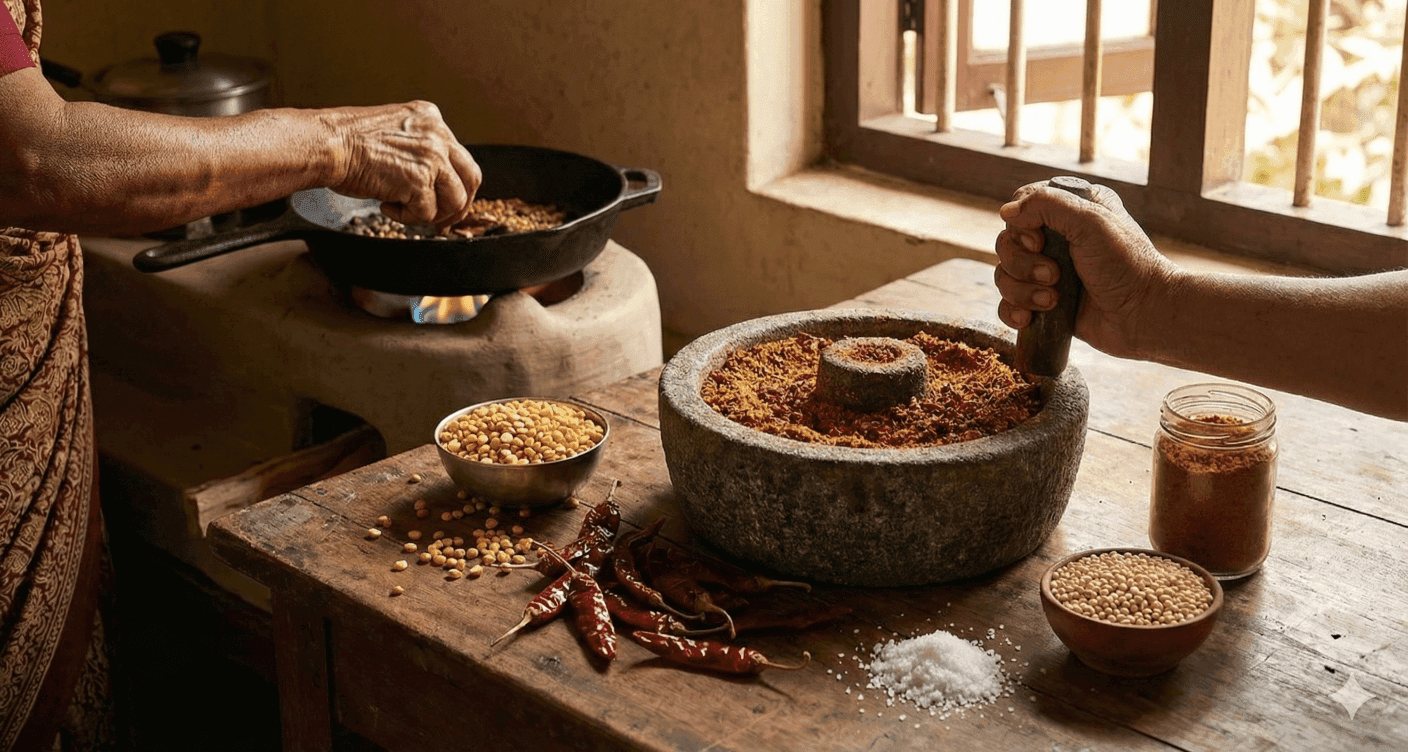
Podi, the quintessential South Indian condiment, is more than just a spice mix—it's a culinary art form passed down through generations. Each family has their own closely guarded recipe, often handed down from grandmother to mother to daughter, with subtle variations that make it uniquely theirs.
The foundation of any great podi lies in the quality of its ingredients. Fresh spices are paramount. Look for chilies that have been sun-dried naturally, giving them a deeper, more complex flavor. The urad dal should be plump and unblemished, while the chana dal adds a nutty sweetness that balances the heat.
The roasting process is where the magic happens. Each ingredient requires different heat levels and timing. Dry red chilies are roasted first until they turn a shade darker and become fragrant—but be careful not to burn them, or your podi will taste bitter. The dals follow, roasted until golden brown, releasing their nutty aroma.
Temperature control is crucial during roasting. Too high, and your spices will burn; too low, and they won't develop their full flavor potential. The ideal approach is medium heat with constant stirring. You'll know the spices are ready when they release their aromatic oils and change color slightly.
Grinding is an art in itself. Traditional stone grinders (attukal) produce a podi with superior texture and taste. The heat generated by electric grinders can sometimes diminish the aromatic oils in the spices. If using an electric grinder, pulse in short bursts and let the mixture cool between grinding sessions.
The texture of your podi depends on personal preference and intended use. A coarser grind works beautifully when mixed with ghee for a dosa accompaniment, while a finer powder is better for coating idlis or mixing into rice. Some families prefer a chunky texture that provides satisfying bursts of flavor.
Salt is added last, and the quantity can make or break your podi. It's always better to start with less and adjust—you can add more, but you can't take it away. Crystal salt ground along with the spices integrates better than table salt added afterward.
Storage is crucial for maintaining freshness. Transfer your podi to an airtight container while it's still warm—this helps create a vacuum seal. Store in a cool, dark place away from moisture. When stored properly, podi can retain its flavor for 2-3 months, though most families find it disappears much sooner!
At House of Kumaran, we honor these traditional methods while ensuring consistency in every batch. Our podis are made in small quantities, roasted to perfection, and ground fresh to preserve the authentic taste of South India.
Lakshmi Sundaram
A passionate food writer and culinary enthusiast exploring the rich heritage of South Indian cuisine. When not writing, you'll find them in the kitchen experimenting with traditional recipes passed down through generations.
Ready to Taste Tradition?
Experience the authentic flavors we write about. Shop our collection of traditional South Indian products.
Shop Now