Regional Flavors: Exploring Chettinad Cuisine
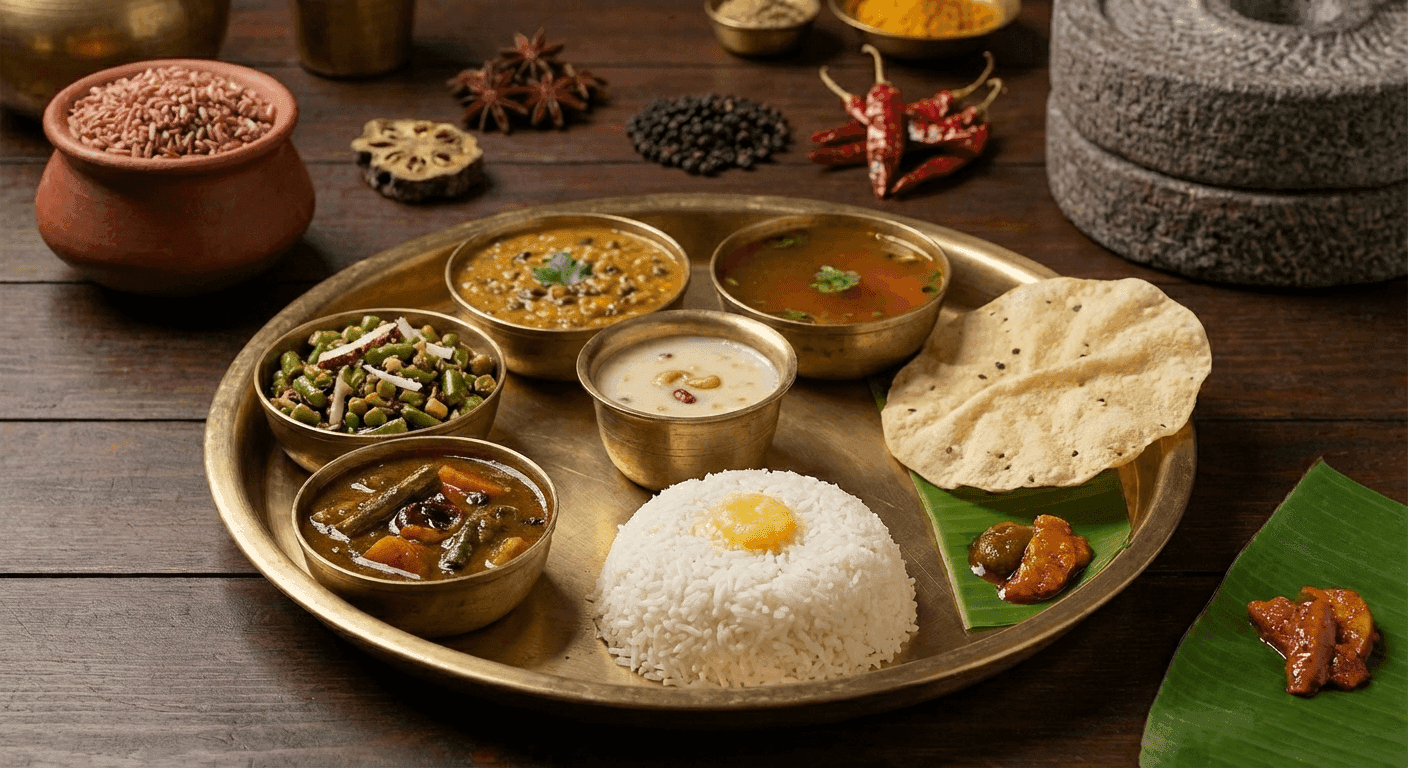
Of all the regional cuisines of South India, Chettinad stands apart for its bold, complex flavors and unique spice blends. Originating from the Chettinad region of Tamil Nadu, this cuisine tells the story of the Nattukotai Chettiars—a merchant community whose travels brought exotic spices and cooking techniques to their homeland.
The Chettiar Legacy: The Chettiars were prominent traders who traveled extensively to Burma, Malaysia, Singapore, and other Southeast Asian countries. They brought back not just wealth, but also rare spices and culinary influences. This history is reflected in Chettinad cuisine's use of ingredients like star anise, mace, and stone flower—uncommon in other South Indian cooking.
The Famous Chettinad Spice Blend: What makes Chettinad food instantly recognizable is its distinctive masala. Unlike other South Indian spice mixes, Chettinad masala includes: Kalpasi (Stone Flower) - a lichen with an earthy, mushroom-like flavor; Marathi Mokku - dried flower pods with a subtle sweetness; Star Anise - adding a gentle licorice note; and generous amounts of black pepper, not just chilies, for heat.
Heat with Depth: Chettinad food is famously spicy, but it's a complex heat. The combination of black pepper, dried chilies, and other spices creates layers of warmth that build gradually. Unlike cuisines that rely on chilies alone, Chettinad food has depth—you can taste each spice distinctly even as they blend harmoniously.
Signature Dishes: Chettinad Chicken (Kozhi Varuval) is the flagship dish—chicken pieces cooked in a rich, dark gravy of freshly ground spices. The meat is traditionally from country chicken, which has a firmer texture. Kavuni Arisi is a black rice pudding sweetened with palm jaggery, traditionally served at weddings. Kuzhambu varieties in Chettinad use more tamarind and are spicier than their counterparts elsewhere in Tamil Nadu.
Cooking Techniques: Chettinad cooking emphasizes freshly ground spices—pre-made masala powders are rarely used in traditional kitchens. Spices are roasted and ground daily, ensuring maximum flavor. Meats are often marinated for hours, sometimes overnight, allowing the spices to penetrate deeply. Clay pots and wood fires are traditional cooking methods that add their own subtle flavors.
Vegetarian Chettinad: While famous for non-vegetarian dishes, Chettinad has a rich vegetarian repertoire. Drumstick sambar, raw banana fry, and various kootu (mixed vegetable) dishes showcase the same bold spicing in vegetarian form. Our Chettinad Podi brings these flavors to your everyday meals.
The Chettinad Kitchen: Traditional Chettinad homes have elaborate kitchens with built-in stone grinders, specialized vessels for different cooking methods, and storage systems for their prized spices. While we can't replicate these kitchens, we can bring Chettinad flavors to modern homes through our products.
Our Chettinad Collection: At House of Kumaran, we've worked with Chettinad home cooks to develop products that capture authentic flavors. Our Chettinad Podi uses traditional spice ratios, including the hard-to-find kalpasi and marathi mokku. It's the closest you can get to Chettinad flavors without visiting Karaikudi.
The Chettinad food philosophy—bold spices, fresh ingredients, time-honored techniques—aligns perfectly with our approach at House of Kumaran. Whether you're familiar with this cuisine or discovering it for the first time, we invite you to explore the rich, aromatic world of Chettinad cooking.
Meenakshi Chettiar
A passionate food writer and culinary enthusiast exploring the rich heritage of South Indian cuisine. When not writing, you'll find them in the kitchen experimenting with traditional recipes passed down through generations.
Ready to Taste Tradition?
Experience the authentic flavors we write about. Shop our collection of traditional South Indian products.
Shop Now